Evolution Courses
Evolution courses can help you learn about natural selection, genetic variation, speciation, and evolutionary history. You can build skills in analyzing evolutionary patterns, understanding ecological interactions, and applying evolutionary concepts to contemporary issues like conservation and climate change. Many courses introduce tools such as phylogenetic trees and statistical software for analyzing genetic data, which help you visualize relationships among species and interpret evolutionary trends.
Popular Evolution Courses and Certifications
 Status: Preview
Duke University
Skills you'll gain: Molecular Biology, Biology, Biostatistics, Biotechnology, Environmental Science, Scientific Methods, Mathematical Modeling
 Status: Free Trial
Rice University
Skills you'll gain: Biology, Environment, Microbiology, Environmental Science, Life Sciences, Environmental Issue, Sustainable Development, Natural Resource Management, Physiology, Molecular Biology, Taxonomy, Cell Biology, Anatomy, Climate Change Adaptation, Estimation, Mathematical Modeling, Scientific Methods, Experimentation
 Status: Free Trial
Rice University
Skills you'll gain: Biology, Taxonomy, Anatomy, Microbiology, Mathematical Modeling, Scientific Methods
 Status: Preview
American Museum of Natural History
Skills you'll gain: Teaching, Education and Training, Instructional Strategies, Instructing, Pedagogy, Anthropology, Life Sciences, Culture, Biology, Curriculum Planning, Taxonomy, Scientific Methods
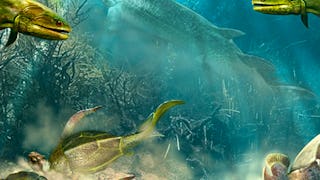 Status: Preview
University of Alberta
Skills you'll gain: Biology, Environmental Science, Environment, Life Sciences, Taxonomy
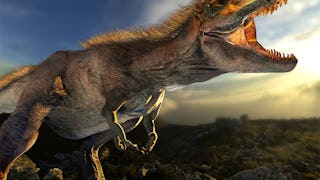 Status: Preview
American Museum of Natural History
Skills you'll gain: Life Sciences, Biology, Environment, Taxonomy, Laboratory Research, Science and Research, Scientific Methods, Timelines, Estimation, Research, Scientific Visualization, Research Methodologies, Laboratory Experience, Environmental Science
What brings you to Coursera today?
 Status: Free Trial
University of California San Diego
Skills you'll gain: Bioinformatics, Statistical Analysis, Graph Theory, Taxonomy
 Status: Preview
University of Copenhagen
Skills you'll gain: Anthropology, Biology, Physical Science, World History, Microbiology, Environment, Ancient History, Biochemistry, Environmental Science, Climate Change Adaptation, Taxonomy, Chemistry, Scientific Methods
 Status: Free Trial
Skills you'll gain: Sustainable Technologies, Basic Electrical Systems, Electric Power Systems, Sustainable Development, Electrical Engineering, Emerging Technologies, Energy and Utilities, Climate Change Mitigation, Environmental Science, Environment
 Status: Preview
Universiteit Leiden
Skills you'll gain: Anthropology, Biology, Culture, Climate Change Adaptation, Molecular Biology, Physiology, Taxonomy, Infectious Diseases, Environmental Science, Microbiology
 Status: NewStatus: Free Trial
Real Madrid Graduate School Universidad Europea
Skills you'll gain: Data Presentation, Matplotlib, Data Synthesis, Probability Distribution, Data Processing, Data Integration, Data Literacy, Performance Analysis, Exploratory Data Analysis, Statistical Analysis, Probability, Applied Machine Learning, Analysis, Image Analysis, Descriptive Analytics, AI Enablement, Business Analytics, Statistical Methods, Data Collection, Machine Learning

 Status: Free Trial
Skills you'll gain: Generative AI, ChatGPT, Prototyping, Artificial Intelligence and Machine Learning (AI/ML), Deep Learning, Machine Learning
What brings you to Coursera today?
In summary, here are 10 of our most popular evolution courses
- Introduction to Genetics and Evolution: Duke University
- Introduction to Biology: Ecology, Evolution, & Biodiversity: Rice University
- Introduction to Biology: Evolution: Rice University
- Evolution: A Course for Educators: American Museum of Natural History
- Paleontology: Early Vertebrate Evolution: University of Alberta
- Dinosaurs: Evolution, Extinction, and Paleobiology: American Museum of Natural History
- Molecular Evolution (Bioinformatics IV): University of California San Diego
- Origins - Formation of the Universe, Solar System, Earth and Life: University of Copenhagen
- EV Evolution: Comprehensive Introduction to EVs: Coursera
- Evolution Today : Universiteit Leiden










