Macroeconomics Courses
Macroeconomics courses can help you learn economic indicators, fiscal and monetary policy, inflation, and unemployment rates. You can build skills in analyzing economic data, understanding market dynamics, and evaluating government policies. Many courses introduce tools like econometric software and statistical analysis methods, that support interpreting economic trends and making informed predictions.
Popular Macroeconomics Courses and Certifications
 Status: Free Trial
Rice University
Skills you'll gain: Economics, Supply And Demand, Economic Development, Financial Policy, Market Dynamics, Business Economics, Business Metrics, Public Policies, Performance Metric, International Finance, Fiscal Management, Investments, Labor Relations, Financial Market, Financial Regulations
 Status: Preview
University of Pennsylvania
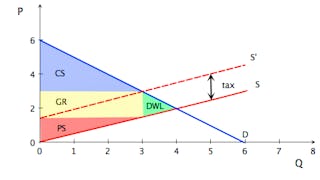
Skills you'll gain: Supply And Demand, Economics, Market Dynamics, Market Analysis, Resource Allocation, Policy Analysis, Tax, Consumer Behaviour, Cost Benefit Analysis, Decision Making
 Status: Free Trial
University of Illinois Urbana-Champaign
Skills you'll gain: Supply And Demand, Economics, Market Dynamics, Behavioral Economics, Resource Allocation, Socioeconomics, Consumer Behaviour, Cost Benefit Analysis, Decision Making, Critical Thinking
 Status: Preview
O.P. Jindal Global University
Skills you'll gain: Economics, Financial Policy, Economic Development, International Finance, Supply And Demand, Policy Analysis, Sustainable Development, Socioeconomics, Behavioral Economics, Accounting, Market Dynamics, Critical Thinking
 Status: NewStatus: Free Trial
University of Illinois Urbana-Champaign
Skills you'll gain: Insurance, Portfolio Risk, Supply And Demand, Insurance Policies, Risk Management, Investments, Wealth Management, Risk Management Framework, Portfolio Management, Market Dynamics, Financial Planning, Investment Management, Finance, Economics, Asset Management, Financial Management, Economic Development, Behavioral Economics, Cost Benefit Analysis, Business Economics
 Status: Free Trial
Fundação Instituto de Administração
Skills you'll gain: International Finance, Business Economics, Economics, Market Dynamics, Business Planning, Business Strategy, Supply And Demand, Investments
What brings you to Coursera today?
 Status: Preview
Yale University
Skills you'll gain: Investment Banking, Risk Management, Financial Market, Financial Regulation, Financial Services, Finance, Business Risk Management, Securities (Finance), Financial Policy, Enterprise Risk Management (ERM), Capital Markets, Behavioral Economics, Banking, Corporate Finance, Governance, Investments, Insurance, Underwriting, Derivatives, Market Dynamics
 Status: Preview
Columbia University
Skills you'll gain: International Finance, Derivatives, Financial Systems, Balance Sheet, Financial Market, Payment Systems, Banking, Capital Markets, Economics, Market Liquidity, Financial Regulation, Finance, Market Dynamics
 Status: Preview
Yale University
Skills you'll gain: Behavioral Economics, Storytelling, Data Storytelling, Economics, Economic Development, Financial Forecasting, Forecasting, Socioeconomics, Social Studies, Consumer Behaviour, Analysis, Complex Problem Solving
 Status: Free Trial
University of Illinois Urbana-Champaign
Skills you'll gain: Supply And Demand, Economics, Market Dynamics, Business Economics, Behavioral Economics, Policy Analysis, Business Operations, Price Negotiation, Socioeconomics, Consumer Behaviour, Political Sciences, Economics, Policy, and Social Studies, Business Strategy, Public Policies, Competitive Analysis, Resource Allocation, Decision Making, Market Analysis, Cost Benefit Analysis, Environmental Issue
 Status: Free Trial
University of Illinois Urbana-Champaign
Skills you'll gain: Financial Policy, Financial Systems, Banking, Financial Market, Financial Regulation, Market Liquidity, Economics, Economics, Policy, and Social Studies, Market Dynamics, Crisis Management
 Status: Free Trial
Rice University
Skills you'll gain: Economics, Supply And Demand, Business Economics, Market Dynamics, Economic Development, Game Theory, Financial Policy, Tax, Market Analysis, International Relations, Operating Cost, Cost Benefit Analysis, Business Metrics, Public Policies, Performance Metric, International Finance, Fiscal Management, Consumer Behaviour, Investments, Labor Relations
Searches related to macroeconomics
In summary, here are 10 of our most popular macroeconomics courses
- Principles of Economics: Macroeconomics - The Big Picture: Rice University
- Microeconomics: The Power of Markets: University of Pennsylvania
- Microeconomics Principles: University of Illinois Urbana-Champaign
- Macroeconomics: Foundations and Insights: O.P. Jindal Global University
- Mastering Money: Risk, Wealth, and Our Economy: University of Illinois Urbana-Champaign
- Macroeconomics for Business Management: Fundação Instituto de Administração
- Financial Markets: Yale University
- Economics of Money and Banking: Columbia University
- Narrative Economics: Yale University
- Microeconomics Principles: University of Illinois Urbana-Champaign










