Fluid Mechanics Courses
Fluid mechanics courses can help you learn the principles of fluid behavior, pressure dynamics, and flow analysis. You can build skills in computational fluid dynamics, experimental techniques, and the application of Bernoulli's equation to real-world problems. Many courses introduce tools like MATLAB and ANSYS, which are used for simulating fluid flow and analyzing complex systems, allowing you to visualize and solve practical challenges in engineering and environmental contexts.
Popular Fluid Mechanics Courses and Certifications
 Status: Free
University of Minnesota
Skills you'll gain: Hydraulics, Mechanical Engineering, Schematic Diagrams, Simulation and Simulation Software, Engineering, Engineering Analysis, Control Systems, Automation Engineering, Engineering Calculations, Mechanics, Matlab, Physics
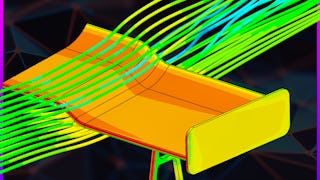
Skills you'll gain: Simulation and Simulation Software, Engineering Analysis, Engineering, Prototyping, Computer-Aided Design, Cloud Computing
 Status: New
Birla Institute of Technology & Science, Pilani
Skills you'll gain: Physics, Mechanics, Engineering, Applied Mathematics, Vibrations, Physical Science, Engineering Analysis, Trigonometry, electromagnetics, Experimentation, Mathematical Theory & Analysis, Problem Solving, Science and Research, Analytical Skills, Computer Science, Critical Thinking and Problem Solving, Logical Reasoning, Research, Software Development, Critical Thinking
 Status: Preview
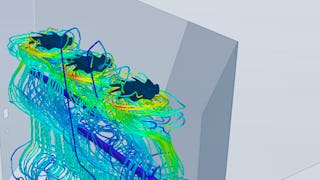
Skills you'll gain: Engineering Analysis, Thermal Management, Mechanical Engineering, Simulations, Numerical Analysis, Engineering Calculations, Mathematical Modeling, Chemical Engineering, Scientific Visualization, Physics
 Status: Free Trial
ISAE-SUPAERO
Skills you'll gain: Mechanics, Thermal Management, Energy and Utilities, Hazard Analysis, Risk Control, Physical Science, Simulations, Applied Mathematics, Control Systems, Systems Of Measurement, Vibrations, Engineering Analysis, Engineering Calculations, Physics, Engineering, Mathematical Modeling
 Status: Free Trial
The Hong Kong University of Science and Technology
Skills you'll gain: Integral Calculus, Engineering Calculations, Calculus, Engineering Analysis, electromagnetics, Engineering, Geometry, Advanced Mathematics, Mechanical Engineering, Applied Mathematics, Mechanics, Electrical Engineering, Physics, Derivatives
What brings you to Coursera today?
 Status: Preview
Georgia Institute of Technology
Skills you'll gain: Engineering Analysis, Mechanics, Torque (Physics), Engineering Calculations, Mechanical Engineering, Engineering, Civil Engineering, Structural Analysis, Applied Mathematics, Trigonometry
 Status: Free Trial
ISAE-SUPAERO
Skills you'll gain: Mechanics, Simulations, Engineering Calculations, Physics, Applied Mathematics, Engineering Analysis, Systems Of Measurement
 Status: Free Trial
Johns Hopkins University
Skills you'll gain: HTML and CSS, Cascading Style Sheets (CSS), Ajax, Javascript, Responsive Web Design, Front-End Web Development, Web Design, Bootstrap (Front-End Framework), Web Development, Development Environment, Web Development Tools, Web Design and Development, JSON, Web Applications, Web Content Accessibility Guidelines, Scripting, Browser Compatibility, Hypertext Markup Language (HTML), Object Oriented Programming (OOP), Event-Driven Programming

Skills you'll gain: Simulation and Simulation Software, Simulations, Engineering Design Process, Finite Element Methods, Engineering Analysis, Hydraulics, Cloud-Based Integration, Verification And Validation, Mathematical Modeling
 Status: Preview
École Polytechnique
Skills you'll gain: Vibrations, Hydraulics, Environmental Engineering, Civil Engineering, Mechanical Engineering, Engineering, Mechanics, Chemical and Biomedical Engineering, Simulation and Simulation Software, Applied Mathematics, Biomedical Engineering, Mathematical Modeling
 Status: Free Trial
L&T EduTech
Skills you'll gain: Hydraulics, Engineering Analysis, Engineering Calculations, Mechanical Engineering, Chemical Engineering, Process Flow Diagrams, Process Analysis, Mathematical Modeling
Searches related to fluid mechanics
In summary, here are 10 of our most popular fluid mechanics courses
- Fundamentals of Fluid Power: University of Minnesota
- Computational Fluid Mechanics - Airflow Around a Spoiler: Coursera
- General Physics: Birla Institute of Technology & Science, Pilani
- Applied Computational Fluid Dynamics: Siemens
- Fundamentals of Flight mechanics: ISAE-SUPAERO
- Vector Calculus for Engineers: The Hong Kong University of Science and Technology
- Introduction to Engineering Mechanics: Georgia Institute of Technology
- Flight mechanics - The basis: ISAE-SUPAERO
- HTML, CSS, and Javascript for Web Developers: Johns Hopkins University
- CFD Simulation Through a Centrifugal Pump: Coursera










